亚马逊官方解读墨西哥税务和法规
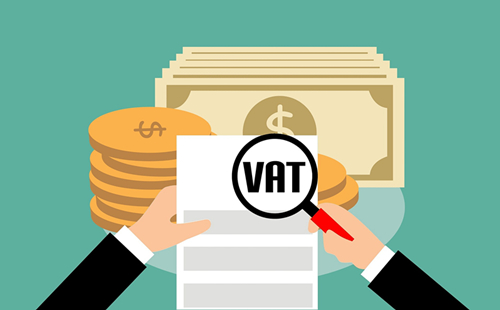
Mexico tax and regulatory considerationsBelow is an overview of tariff and duty rates, nonresident importer requirements, prohibited products, and certain other applicable regulations for selling in Mexico.Note: This page is not intended to provide customs or legal advice. We recommend that you consult with a customs broker or legal adviser before selling in Mexico.Mexico taxes and regulations differ depending on the importer of record (IOR) for the products sold to Mexican customers:Self-fulfilled products: If you ship your products to customers from outside Mexico, you will be listed as the IOR. This means you must pay destination duties, taxes, and customs-clearance fees before your product can be sold to customers on Amazon.com.mx.Fulfillment by Amazon (FBA): If you import inventory to be stored in an Amazon fulfillment center in Mexico, you are the IOR and must pay destination duties, taxes, and customs-clearance fees before your product can be stored in a Mexico fulfillment center when your products are sold to customers on Amazon.com.mx. Note that Amazon and its fulfillment centers will not serve as the IOR for any FBA shipment. Listing Amazon as the IOR on FBA shipments to Mexico or failing to specify an IOR may result in loss of selling privileges. In addition, noncompliant shipments may be refused and returned at the shipper’s expense.Remote Fulfillment with FBA: If you sell products in Mexico through Remote Fulfillment with , the customer becomes the IOR. Amazon will collect from the customer and pay the destination duties, taxes, and customs-clearance fees on their behalf.International shipment standards"Normas Oficiales Mexicanas" and "Normas Mexicanas": Technical barriers to trade arise from the application of technical regulations or standards. Generally, technical regulations are mandatory, and governments establish, monitor, and enforce them. Standards, on the other hand, are voluntary and take effect in a given market because the parties concerned agree to use them. Mexico has both of these types of technical barriers: "Normas Oficiales Mexicanas" (NOM) are technical regulations. "Normas Mexicanas" (NMX) are voluntary standards, intended for use as references. In many countries, technical regulations and standards are complementary. In Mexico, however, technical regulations are fundamental.Compliance: Foreign companies must meet Mexican product technical regulations as a condition for selling products in Mexico. Product-safety NOMs require Mexican importers to present a NOM certification to Mexican customs along with all other import documents. This certificate attests that the product has been verified and found to have complied with the applicable NOM. A product that is subject to a NOM cannot be imported into Mexico unless it has been certified as complying with the NOM. Samples of goods may be imported in order to be tested by approved laboratories.For more information, visit the Mexican government’s economy page and search "normatividad empresarial" or "normas."The MX NOM Mark, a product-safety mark for Mexico, is a requirement for the majority of electronic items. It certifies that the product meets the safety requirements contained in the NOMs. For certification purposes, the MX NOM Mark must appear on the product unless an alternate location on packaging is specified in writing as permitted by law. It is strongly recommended that the shippers ensure their products are NOM-compliant.Technical standards for labeling include the following:General labeling of consumer goods (NOM-050-SCFI-1994)Labeling of food and non-alcoholic beverages (NOM-051-SCFI-1994)Labeling of alcoholic beverages (NOM-142-SSA1-1995)Labeling of textiles, clothing, and accessories (NOM-004-SCFI-1994)Labeling of leather and artificial materials with such appearance, footwear, and products made of these materials (NOM-020-SCFI-1997)Labeling of electrical and electronic products, as well as household appliances (NOM-024-SCFI-1998)Labeling of paints, varnishes, and similar goods (NOM-003-SSA1-1993)For more information, check with your customs broker or legal adviser. You can also visit Normas Oficiales Mexicanas or Servicio de Administracion Tributaria (SAT).English-language translations of common NOMs are available for a fee from Mexlaws.com and other third-party sources.Prohibited productsThe import or export of certain fish, seeds, vegetable products, chemicals, reptile skins, and archaeological or historical artifacts is prohibited under Mexican law. We suggest that you contact your customs broker or legal adviser before shipping any inventory to understand any restrictions that may apply.Copyright/trademark enforcementThe customs administration can suspend release of counterfeit trademarked and pirated copyright goods into circulation. A rights-holder suspecting import of illegal goods can apply with appropriate Mexican authorities to take action.Sellers will need to ensure the following:The seller is the holder of the trademark rights.The seller is authorized to use and distribute the brand.Goods have no physical branding information.Goods have a physical branding but are not registered with the Industrial Property Mexican Institute (IMPI).Selling products as the IORIf you import your inventory into Mexico, you must pay destination duties, taxes, and customs-clearance fees before your product can be sold to customers on Amazon.com.mx or stored in a fulfillment center in Mexico.Importer registrationSellers' next steps generally depend on whether or not they're residents of Mexico for tax purposes.ResidentsSellers acting as importer of record on their own shipments must have a tax number (Registro Federal de Contribuyentes or "RFC") and must generally be residents of Mexico for income-tax purposes. Resident importers must be registered and listed on the Importers' Registry (Padrón de Importadores) of the Secretariat of Finance and Public Credit (Hacienda). Certain products may require additional registrations for import. Sellers should consult a customs broker, legal adviser, or both in Mexico to identify the appropriate solution for their business.Additional guidance that may be helpful for sellers in the U.S. and other jurisdictions can be found on the U.S. Department of Commerce’s Doing business in Mexico page.NonresidentsMost nonresidents have three options for importing goods into Mexico: (i) listing the end customer (where appropriate) as the importer of record, (ii) engaging a third party authorized to import into Mexico, or (iii) incorporating and registering before tax authorities a local Mexican entity to act as the importer. In each case, the party acting as the importer must have an RFC. Because each situation is different, sellers should consult with a customs broker, legal adviser, or both to identify a solution most appropriate to their business.As noted above, Amazon and its fulfillment centers will not serve as the importer of record for any shipment of FBA inventory.Customs clearanceA "pedimento de importación" (import declaration) must be filed to obtain customs clearance. A carrier or customs broker often files this on the importer's behalf. The pedimento generally includes information on taxes and governmental fees, such as prescreening fees, customs processing fees, countervailing duties, value-added tax, and import or export duties.The following documents are required for filing the pedimento:Commercial invoice: The invoice documents the sale for export to the country of importation. Thus, the invoice is essential to determine the transaction value of the goods. Mexican customs regulations are detailed concerning the information that the invoice must contain. Foreign sellers or shippers must exercise care in preparing invoices.Required information varies but may include:Place where the invoice was issuedDate on which the invoice was issuedInvoice numberSeller's nameSeller's full mailing addressImporter's nameImporter's full mailing address (no P.O. box)Detailed description of the goods (including grade or quality; avoid using codes)Quantities in weights and measuresUnit pricesTotal value of the invoice (and currency of such amount)Country of originCommercial terms (e.g., CIF or FOB)Seller's tax-identification numberIdentification numbers—such as serial, part, and model numbers—of each good or packageWe suggest you contact your customs broker or legal adviser to understand what information should be included for your products.The invoice is accepted in Spanish, English, and French, in accordance with Mexican law and regulations. Invoices in any other language must be translated into Spanish within the same invoice or in a letter attached to it.Transportation documents: The bill of lading, endorsed by the transport company, is also attached to the customs declaration. These documents normally prove the date on which the goods entered the customs territory.Certificates, licenses and permits: If any of the goods are subject to import controls, the appropriate certificates, licenses and permits must be included with the documentation.Depending on the circumstances, certain additional documents may be required. These can include: proof of origin (for example, if preferential duties or countervailing duties apply); document(s) demonstrating guarantee of payment of additional applicable duties (for undervalued goods); nontariff regulations and certificates of safety/standards compliance (if applicable); and serial numbers, part numbers, brand, model numbers, or other information that may be needed to identify the goods. For more information, check with your customs broker or legal adviser.All shipments entering Mexico should have a tracking number.Duties and taxesMerchandise imported into Mexico must be identified with the proper, eight-digit Mexican tariff classification number. This will determine the duty rate and establish any applicable nontariff barriers.For information on Mexico's tariff schedule see the Sistema Integral de Información de Comercio Exterior website (Spanish language only) or consult with your customs broker, carrier, or legal adviser.Additional taxes and surcharges may apply, including:Value-added tax (IVA): Customs authorities collect a value-added tax (VAT。

.jpg)





.jpg)

.jpg)








 市场合作:shichangbu@eservicesgroup.com